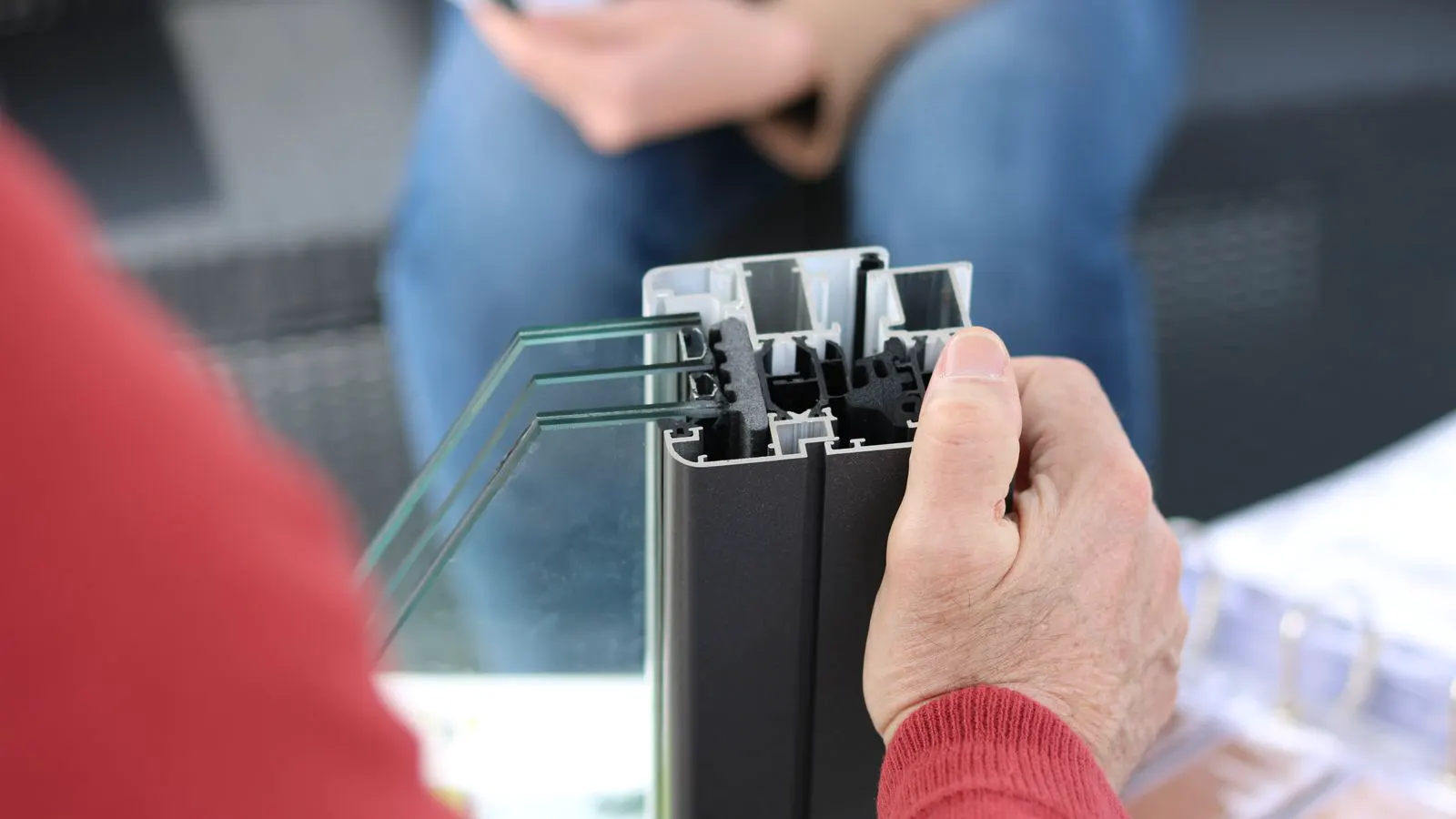
Thermal break aluminum frames add an insulating barrier to the metal, reducing heat transfer. Standard frames conduct heat more freely. Specifiers must choose based on climate, building codes, and the required level of energy efficiency.
- Thermal break frames reduce heat loss and condensation risk compared to standard aluminum.
- Standard frames suit non-critical areas or projects with strict budget constraints.
- Frame selection must align with local building codes and target U-values.
- Check for certification of the thermal break material and its connection points.
- Condensation is a primary failure mode for standard frames in mixed climates.
How Thermal Breaks Change Heat Transfer
Aluminum conducts heat at a rate significantly higher than wood or PVC. In a standard aluminum window frame, the metal acts as a continuous bridge between the interior and exterior. Heat escapes through the frame material itself. This path is often called a thermal bridge.
A thermal break frame interrupts this path. A non-conductive material sits between the inner and outer aluminum profiles. This barrier stops the direct flow of heat. Common materials for the break include polyamide, PEEK, or plastic composites. The result is a frame with two separate metal zones. The inner zone stays warmer in winter. The outer zone stays cooler.
This separation changes the performance profile of the window. The frame becomes a minor contributor to heat loss rather than a major one. For specifiers, this distinction determines whether a frame meets energy codes or causes condensation problems.
Performance Differences in Practice
The difference between the two frame types is measurable in thermal behavior. Standard aluminum frames have high thermal conductivity. The entire frame surface approaches the exterior temperature. This creates a cold spot on the inner glazing line.
Thermal break frames maintain a higher internal surface temperature. The aluminum on the inside remains closer to room temperature. This change has two direct impacts on the building envelope.
First, the thermal resistance of the frame improves. The frame U-value drops. The window assembly achieves lower energy loss. Second, the risk of condensation decreases. When the inner frame surface is warmer, it is less likely to drop below the dew point.
For most commercial and residential projects, this difference is the deciding factor. Energy codes increasingly target the whole building envelope, not just the glazing. A window with excellent glass but a standard frame can fail to meet the overall requirement.
Comparison of Frame Options
| Option | Best for | Limitations |
|---|---|---|
| Standard Aluminum | Low cost, simple detailing, non-thermal zones | High heat loss, condensation risk, poor energy rating |
| Thermal Break Aluminum | Most residential and commercial projects | Slight cost increase, more complex profiles |
| Thermally Improved Aluminum (TIA) | High-end residential, strict energy codes | Higher cost, requires specialized manufacturing |
| Hybrid Aluminum-Plastic | Balances cost and performance | Weight and strength trade-offs, joint integrity |
| Composite Aluminum | Large span, heavy glass | High cost, limited availability |
The standard frame is the baseline. It uses a single aluminum profile for both sides. The joint between the inner and outer skins is a solid metal connection. This is the simplest form of window framing. It is often found in older buildings or applications where the window is not a primary energy barrier.
Thermally improved aluminum frames use a standard aluminum profile but insert a plastic or polymer break. The break is usually a strip of polyamide. This is the most common upgrade for specifiers. It offers a significant performance jump for a modest cost increase.
Hybrid frames combine aluminum with plastic. The plastic provides the thermal break and the structural core. Aluminum is used for the outer skin. This approach can reduce weight and cost. However, the joint between materials requires careful engineering. Differences in expansion rates can cause stress over time.
When to Choose a Standard Frame
Standard aluminum frames are not obsolete. They have a place in specific applications. The choice depends on the building’s thermal requirements.
Use a standard frame when the window is in a low-thermal zone. This might be a garage door, a basement window, or an industrial loading dock. These areas have less stringent energy requirements. The cost savings can be significant.
Standard frames are also suitable for retrofit projects where the primary goal is durability, not energy savings. If the building is already thermally insulated and the window is a secondary element, the standard frame may be acceptable.
However, standard frames are rarely recommended for main living spaces. The condensation risk is a practical problem. In mixed climates, the inner frame surface can become cold enough to cause water damage. This leads to mold, rot in adjacent wood, and reduced occupant comfort.
When to Choose a Thermal Break Frame
Thermal break frames are the default choice for most new construction. The energy code requirements for residential and commercial buildings have risen. The standard frame often fails to meet the maximum U-value for the window assembly.
Choose a thermal break frame when:
- The project must meet current energy codes.
- The window is in a habitable space.
- The climate has a significant temperature difference between day and night.
- The design includes large glass areas where frame performance matters.
- The project targets a specific energy certification level.
The thermal break also improves acoustic performance. While the primary goal is thermal, the break can help dampen sound transmission. The plastic barrier disrupts the direct vibration path through the metal. This is a secondary benefit that often influences the final selection.
Application Fit and Building Codes
Frame selection is driven by local building codes. The code specifies a maximum U-value for the window assembly. This value includes the frame and the glass. A standard frame has a high U-value. It can push the whole window over the limit, even if the glass is triple-glazed.
Specifiers must calculate the effective U-value. This calculation accounts for the area of the frame versus the glass. A standard frame has a large thermal area. A thermal break frame has a smaller thermal area. The difference can be the difference between passing and failing the code.
In commercial projects, the focus is often on the building envelope as a whole. The window is a weak point. Using a thermal break frame strengthens the envelope. It reduces the load on the HVAC system. It also improves the overall energy rating of the building.
Checking the Thermal Break
Not all thermal breaks are equal. The quality of the break material and its connection determine the performance. A thin plastic strip may not provide the same insulation as a thick polyamide barrier.
Check the following:
- The material of the break (polyamide is standard).
- The thickness of the break.
- The connection points between the inner and outer profiles.
- The certification of the frame for its thermal performance.
The connection points are critical. If the break is interrupted by a metal clip or a screw, the thermal bridge returns. The clip acts as a new path for heat. Look for frames where the break is continuous. Avoid designs that use metal connectors across the break line.
Also check the glazing bar. The glazing bar holds the glass in the frame. If the glazing bar is aluminum and connects the inner and outer profiles, it creates a thermal bridge. High-performance frames use a plastic glazing bar or a thermal break glazing bar.
Cost and Maintenance Considerations
Thermal break frames cost more than standard frames. The price difference is due to the additional material and the manufacturing complexity. The profile is more complex. The casting and assembly require more steps.
Maintenance is similar for both. Aluminum is durable and requires minimal upkeep. The thermal break does not add a maintenance burden. The plastic break is stable and does not degrade under normal conditions.
The cost difference must be weighed against the performance gain. In many projects, the cost of a thermal break frame is recovered through energy savings. The reduced heat loss lowers heating and cooling costs. The improved condensation control reduces repair costs.
For specifiers, the initial cost is a small part of the total lifecycle cost. The long-term performance and compliance are the real value. A standard frame may save money upfront but create problems later.
Final Selection Criteria
The choice between standard and thermal break aluminum frames comes down to a few clear criteria.
- Energy Code: Does the project need to meet a specific U-value? If yes, a thermal break is likely required.
- Climate: Is the climate cold or has large temperature swings? If yes, a thermal break is necessary to prevent condensation.
- Location: Is the window in a habitable space or a utility area? Habitability drives the need for thermal performance.
- Budget: Is the budget tight? Standard frames are cheaper but carry higher risk.
- Longevity: Will the building be in use for decades? The thermal break protects the building envelope and reduces long-term costs.
For most projects, the thermal break frame is the correct choice. It provides the necessary performance for modern building standards. The standard frame is a niche option for specific, low-impact applications.
Specifiers should not default to standard frames. The performance difference is too significant. The thermal break frame is the industry standard for a reason. It solves the primary problem with aluminum: high thermal conductivity. By interrupting the heat flow, the frame becomes a reliable part of the building envelope.
Frequently asked questions
Can a standard aluminum frame pass energy codes?
Only in very low-impact applications or where the glass area is minimal. For most residential and commercial windows, the high thermal conductivity of standard aluminum makes it difficult to meet current U-value requirements.
What is the main failure mode of a standard frame?
Condensation. The cold inner surface of the frame can drop below the dew point, causing water to form. This leads to mold, damage to adjacent materials, and reduced comfort.
Is the thermal break visible from the outside?
No. The thermal break is an internal component. The exterior appearance of a standard and a thermal break frame is identical. The difference is only in the cross-section and performance.
Do thermal break frames require different hardware?
Generally, no. The same hardware is used for both. However, the frame profile is different, so the hardware must match the specific profile design.
Can you install a thermal break on an existing standard frame?
No. The break is part of the profile manufacturing. It cannot be added after installation. If a standard frame is already installed, it cannot be retrofitted with a thermal break.